
Guan guan tea: Gansu's warming winter ritual in Lanzhou
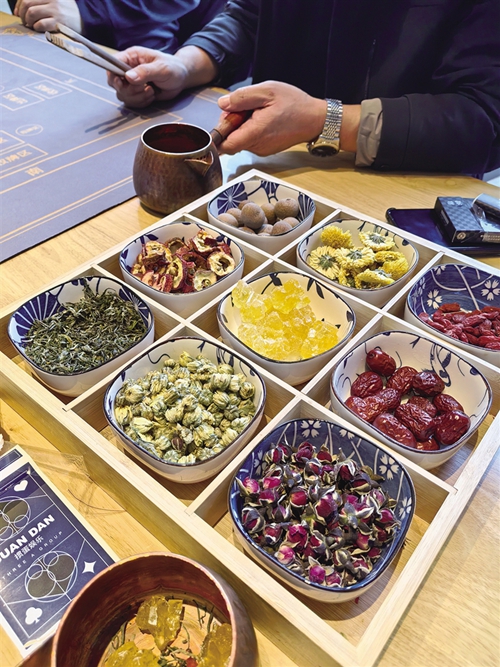
Today's Guan guan tea has a wide variety of ingredients. [Lanzhou Wanbao]
In the heart of winter, a warm scene unfolds across Lanzhou, Gansu province. People gather around stoves, watching a fist-sized clay pot simmer with tea bricks, charred jujubes, and goji berries. Once the brew turns a rich amber, it is poured into small cups and enjoyed with crispy baked bread. This is Guan guan tea, a centuries-old tradition cherished throughout Gansu.
More than just a tea leaf, Guan guan tea involves a slow-cooking method that dates back to the Ming Dynasty (1368-1644). Its essence lies in brewing and roasting; ingredients are simmered repeatedly in a local clay pot until the flavor becomes rich and mellow — offering an initial gentle bitterness that gives way to a sweet aftertaste of jujubes, perfectly suited to Northwest China's cold, arid winters.
Today, this ancient tea custom has traveled from rural hearths to urban teahouses, becoming a trendy experience for younger generations. Along Lanzhou Old Street and Gannan Road, many venues preserve the traditional brewing method while adding modern touches: electric stoves replace charcoal, a wider range of ingredients is offered, and cultural products like postcards accompany the service.
A single pot of tea simmers with time and steeps human connection. If you find yourself in Lanzhou, sit down and wait for the water to boil. In the rising steam, you can taste a warmth that has flowed through a thousand years.
 The Hexi Corridor: A legendary passage
 -
Dunhuang is not just an ancient oasis in an arid land, but a spring of love for my family.
View all stories
 >
>